04 February, 2026
WWII Pillboxes Transformed into Havens for Endangered Seabirds
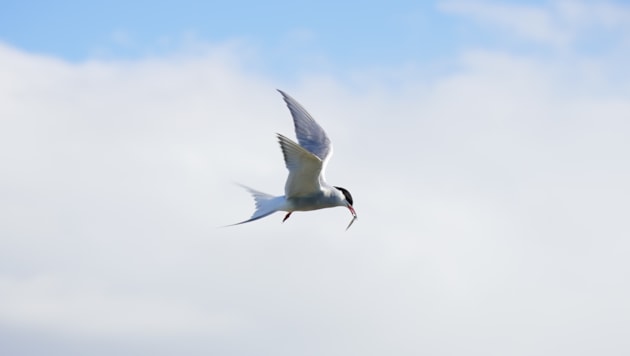
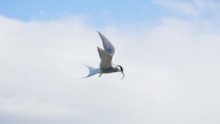
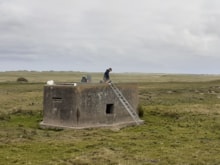
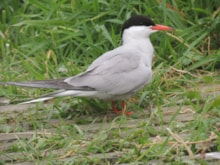
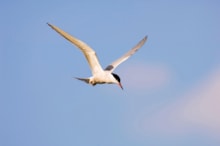
Derelict Second World War pillboxes at RSPB Loch of Strathbeg are being given a new lease of life as nesting sites for the in-decline Common Tern, thanks to an innovative conservation project.
Through the conservation programme Species on the Edge, four disused military structures are being converted into safe breeding habitats for the threatened seabirds at the reserve, located on Scotland's north-east coast.
The pillboxes were originally built in 1940 as part of an anti-tank stop line to protect the flat beaches from potential invasion and to defend the nearby airbase. Now, 85 years later, they are being transformed to help safeguard wildlife.
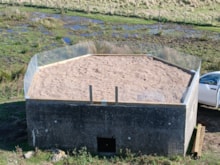
Species on the Edge Trainee Luke Butler has been leading the conversion work, covering the pillbox roofs with shingle substrate and installing mesh fencing on wooden frames to protect against predators. The design mimics the natural gravel and shingle sites where Common Terns typically build their simple nests.
Luke Butler said: "It's great to be transforming these relics of wartime defence into sanctuaries that could bring new life to the reserve and help create a securer future for Common Terns in Scotland."
Common Terns are facing numerous threats including declining food availability, human disturbance, predation, and the effects of avian influenza, but habitat loss has been particularly damaging.
The pillbox project aims to bolster the existing Common Tern population at RSPB Loch of Strathbeg – the UK's largest dune loch – by increasing the availability of breeding habitat. This will give the terns more options for safe nesting sites, free from disturbance and predation.
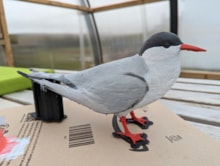
Sound lures playing tern calls and model terns placed on the modified pillboxes will be used to encourage Common Terns to nest there.
Robyn Stewart, Species and Habitats Officer with RSPB and the Species on the Edge lead for the programme’s tern work, said: “The tern pillboxes are maybe one of the most innovative examples of upcycling I've come across and are a testament to the creativity and dedication of Luke and the wider RSPB Loch of Strathbeg team who have supported this project. The east coast of Scotland is incredibly important for terns and the pillboxes will provide some much-needed breeding habitat for Common Terns to raise their chicks free from disturbance and predation.”
Contact information
- Name
- Eilidh Ross
- eilidh.ross@nature.scot
Notes to editors
Species on the Edge is a ground-breaking multi-partner species conservation programme dedicated to supporting vulnerable and threatened species found along Scotland’s coast and islands. Funded by The National Lottery Heritage Fund, the partnership consists of Amphibian and Reptile Conservation, Bat Conservation Trust, Buglife, Bumblebee Conservation Trust, Butterfly Conservation, NatureScot, Plantlife, and RSPB Scotland.
NatureScot is Scotland's nature agency. Responding to the twin crises of biodiversity loss and climate change, we work to protect and restore nature by inspiring everyone to value our natural world. Our goal is a nature-rich, net-zero future for Scotland. For more information, visit our website at www.nature.scot
'S e buidheann nàdair na h-Alba a th’ ann an NàdarAlba. Bidh sinn a’ gleidheadh agus a’ slànachadh nàdar le bhith a’ brosnachadh a h-uile duine gu spèis a chur air an t-saoghal nàdarra againn, agus sinn a’ freagairt air an dà chùis-èiginn de chall bith-iomadachd ’s atharrachadh na gnàth-shìde. ’S e ar n-amas nàdar beairteach ’s cothromachadh carboin do dh’Alba. Airson an tuilleadh fiosrachaidh, thoiribh sùil air an làraich-lìn againn aig www.nature.scot