02 September, 2026
Scotland's hill-goers urged to plan ahead as key deer stalking period approaches
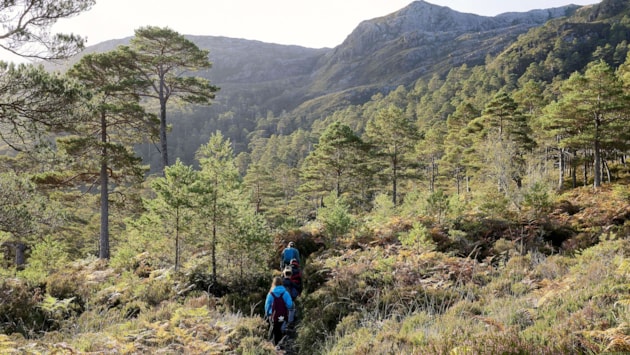
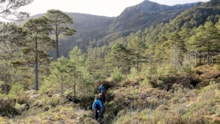
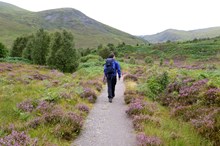
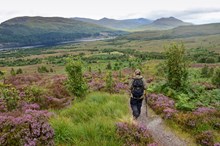
With red deer stag stalking activity building towards the busiest period of the year, NatureScot is encouraging hill-goers to use the Heading for the Scottish Hills service to help plan their visits and avoid disturbing essential deer management.
The Heading for the Scottish Hills service, part of the Scottish Outdoor Access Code website, helps people find out where deer stalking is taking place before they head out. Alongside other resources such as Walkhighlands and estate websites, the service advises where and when stalking happens on popular hills, provides contact details for land managers and includes routes that are 'always okay'.
Managing deer plays a critical role in Scotland's response to nature loss and climate change. Controlling the impact of deer – including overgrazing, browsing and trampling – supports the recovery of upland habitats, boosts biodiversity and helps restore carbon-absorbing vegetation and damaged peatland.
Now is a good time to get into the habit of checking the Heading for the Scottish Hills service regularly, as stag stalking activity typically increases in the autumn. The first three weeks of October are the busiest time for stag stalking, while the latter weeks of the red deer hind season (which runs from 21 October to 15 February) are the busiest for hinds. This is when taking care to avoid disturbance matters most.
Deer are alert to human activity from a considerable distance, often long before a walker is aware of them. Even well-intentioned hill-goers can disrupt a day's stalking without realising it. Simple steps – such as planning a route that avoids areas where stalking is taking place, staying flexible on the day and following any reasonable requests from land managers – can make a real difference. It is also worth noting that fewer routes are affected by stalking on Saturdays, and stalking does not usually take place on Sundays.
Ali Tait, NatureScot People and Places Officer – Access and Visitor Management, said:
“During the past year, over 4,600 people have visited the Heading for the Scottish Hills webpages – with most visits during the key busier period in the autumn. By using this service, people are planning hill routes that reduce the chance of disturbing stalking, in line with the Scottish Outdoor Access Code. The service is still growing, and we would encourage landowners and land managers to sign up if they haven’t already.”
Catriona Davies, Mountaineering Scotland Access & Conservation Officer, said:
“Autumn is a fantastic time to get out into the hills and, as responsible access users, we need to be aware it is also an important time of year for deer management. Heading for the Scottish Hills is a useful resource that helps us plan our routes to minimise the chance of disturbing deer stalking, while making the most of our beautiful mountain landscapes. We encourage all hillwalkers, hill runners and climbers to check the Heading for the Scottish Hills website before they head out.”
Tom Turnbull, Chairman of the Association of Deer Management Groups, said:
“Deer managers are under increasing pressure to complete culls in line with the objectives of the Natural Environment (Scotland) Act 2026. The Heading for the Scottish Hills service provides a vital tool in enabling deer managers to deliver targets for climate and biodiversity. It is greatly appreciated when signage is followed and advice is taken by those taking access, thereby limiting disturbance at this important time of year.”
The Heading for the Scottish Hills service was first launched in 2015 and is available at www.outdooraccess-scotland.scot/hftsh. Landowners and land managers who would like to sign up for the service can e-mail HFTSH@Nature.scot for more information.
Contact information
- Name
- NatureScot Media
- Telephone
- 0131 316 2655
- media@nature.scot
Notes to editors
- NatureScot manages the Heading for the Scottish Hills service.
- From 2023, male deer stalking can take place all year round. Most red deer stag stalking continues to take place between July and mid-October, with increasing activity from August to mid-October. Red deer hind (female) stalking takes place from the 21st of October to the 15th of February.
- The busiest stalking periods are influenced by the natural seasonal breeding cycle and movements of red deer, as well as welfare considerations.
NatureScot is Scotland's nature agency. Responding to the twin crises of biodiversity loss and climate change, we work to protect and restore nature by inspiring everyone to value our natural world. Our goal is a nature-rich, net-zero future for Scotland. For more information, visit our website at www.nature.scot
'S e buidheann nàdair na h-Alba a th’ ann an NàdarAlba. Bidh sinn a’ gleidheadh agus a’ slànachadh nàdar le bhith a’ brosnachadh a h-uile duine gu spèis a chur air an t-saoghal nàdarra againn, agus sinn a’ freagairt air an dà chùis-èiginn de chall bith-iomadachd ’s atharrachadh na gnàth-shìde. ’S e ar n-amas nàdar beairteach ’s cothromachadh carboin do dh’Alba. Airson an tuilleadh fiosrachaidh, thoiribh sùil air an làraich-lìn againn aig www.nature.scot