15 October, 2026
Scotland sows the seed to save the nation’s plants
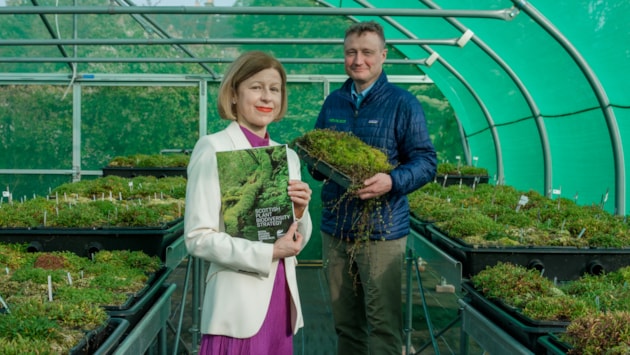
A world-leading strategy to help Scotland’s struggling plant life has been launched today by NatureScot and the Royal Botanic Garden Edinburgh.
Plants and lichens are the basis of all life on Earth, but human-driven pollution, land use and climate change have led to the decline of almost half (47%) of flowering plant species in Scotland in the past 50 years; this figure is even worse for mosses (62%) and lichens (57%). Their decline since the 1970s means that Scotland’s plant life is now in crisis.
The Scottish Plant Biodiversity Strategy has been developed by a raft of national voices who champion plants in Scotland, including environmental and botanical charities, networks, agencies, as well as volunteer and trade associations, national parks, local authorities, and environmental non-governmental organisations (ENGOs). It sets out ten urgent actions necessary for Scotland’s plants, with an emphasis on achieving rapid progress towards healthy and sustainable plant biodiversity, in turn supporting livelihoods, culture and wellbeing.
From making citizen and community science projects accessible to everyone - including ethnic minority groups, women, youth and marginalised communities - to increasing the number of students of plant science; and from support for native woodland, peatland and river catchment planting to recovery projects for everything from orchards to seagrass meadows, people, places and plants sit at the heart of the new strategy.
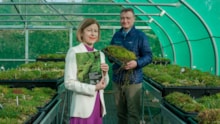
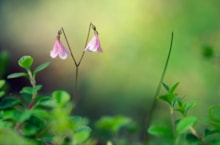
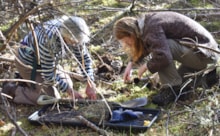
Twinflower (Linnaea borealis) is one of Scotland’s rarest yet most iconic wildflowers, with fewer than 800 plants remaining in the UK. The 2025 Scottish Biodiversity List included it as a species of principal importance in Scotland, and the tiny plant with two pink bell-like flowers on a slim stem is found in Caledonian pinewood. Last year Plantlife and RSPB Scotland teamed up with local landowners to create a new Twinflower nursery in the Cairngorms at RSPB Abernethy, thanks to support from the Nature Restoration Fund, managed by NatureScot. Volunteers and the Cairngorms Rare Plants Project have since ensured that over one thousand cuttings have been moved to new sites, seeing 26 nursery beds filled, with a total of 98 planned for completion in the coming years. Ultimately, once these cuttings become strong young plants, they will be moved into suitable wild habitats to help support its species recovery.
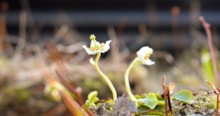
Another example of the large-scale collaborative action needed to help Scotland’s endangered plant species is the recent rescue of the rare One-flowered Wintergreen (Moneses uniflora), both within Cairngorm National Park and at Culbin Forest by Plantlife, Forestry and Land Scotland, the Royal Botanic Garden Edinburgh and NatureScot. The tiny woodland flower only grows at seven sites in Scotland – with a mere three of those home to a healthy population - and it is estimated that half of the entire UK population of this flower has been lost over last 50 years. Recent translocations at Culbin saw individual plants rescued from areas of coastal erosion for future planting within Culbin Forest and other suitable woods in northern Scotland.
NatureScot Chief Executive, Nick Halfhide said: “In Scotland we are fortunate to have exceptional, and internationally important ecosystems, such as temperate rainforest, peatlands, machair, and Caledonian pine forest, of which plants are the foundation.
“Whether it’s converting sunlight into energy for our food; offering shade and shelter; keeping our soils stable; managing our climate and water levels, or producing our natural resources such as timber, fibre and medicines, plants and lichens are the basis of a healthy natural world, but their decline since the 1970s means that Scotland’s plant life is now in crisis.
“We must all rise to the challenge of halting the loss of biodiversity by 2030 and restoring it by 2045 through strong partnerships and direct action to help maintain and enhance Scotland’s plants and lichens for us all now, and for future generations.”
Royal Botanic Garden Edinburgh Regius Keeper, Professor Julia Knights said: “Biodiversity loss is a global challenge. It is also a national challenge including in Scotland. There are many causes, such as climate change, land management practices, pollution, and the impact of invasive species. Many plants are now threatened and exist in fragmented populations from which they are unable to expand naturally.”
Professor Knights added: “At the Royal Botanic Garden Edinburgh, we are committed to saving plant species from extinction globally and in Scotland. As such, we are thrilled to be partnering on this crucial Scottish plant biodiversity strategy. We have much experience in protecting plant species through our Scottish Native Plants project, funded by the Nature Restoration Fund, which involves restoring populations of many threatened species, reversing past biodiversity losses. This new strategy for Scotland provides a clear framework for managing the complex but feasible challenge of protecting and restoring our precious natural habitats for future generations to enjoy.”
Climate Action and Rural Affairs Secretary, Gillian Martin said: “Plants are fundamental to our climate, economy and communities. With Scotland’s flowering plant species in decline since 1970, we must continue to protect and restore the foundations of our natural world.
“The Scottish Plant Biodiversity Strategy sets out a clear, collaborative approach to safeguarding Scotland's plant life, with targeted actions that complement the Scottish Government’s ambitions to restore and regenerate biodiversity across Scotland by 2045.
“Ahead of the major international biodiversity conference in Armenia, this strategy sends a strong message that Scotland is not waiting for others and taking strong action at home now to protect and restore our native plant life.”
ENDS
Contact information
- Name
- NatureScot Media
- Telephone
- 0131 316 2655
- media@nature.scot
Notes to editors
- Read the full Scottish Plant Biodiversity Strategy.
- The Scottish Plant Biodiversity Strategy is a key part of both the Global Strategy for Plant Conservation and the Scottish Biodiversity Strategy, which outlines Scotland’s commitment to a nature rich future; that by 2045 Scotland will have restored and regeneration biodiversity across our land, freshwater and seas.
- Find out more about the state of Scotland’s nature: https://stateofnature.org.uk/countries/scotland/
NatureScot is Scotland's nature agency. Responding to the twin crises of biodiversity loss and climate change, we work to protect and restore nature by inspiring everyone to value our natural world. Our goal is a nature-rich, net-zero future for Scotland. For more information, visit our website at www.nature.scot
'S e buidheann nàdair na h-Alba a th’ ann an NàdarAlba. Bidh sinn a’ gleidheadh agus a’ slànachadh nàdar le bhith a’ brosnachadh a h-uile duine gu spèis a chur air an t-saoghal nàdarra againn, agus sinn a’ freagairt air an dà chùis-èiginn de chall bith-iomadachd ’s atharrachadh na gnàth-shìde. ’S e ar n-amas nàdar beairteach ’s cothromachadh carboin do dh’Alba. Airson an tuilleadh fiosrachaidh, thoiribh sùil air an làraich-lìn againn aig www.nature.scot