07 February, 2020
Renewed General Licence brings greater protection for Scotland’s wild birds
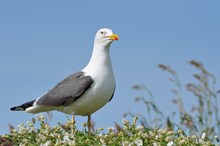
Eleven species of birds, including rooks, great black-backed gulls and collared doves will have stronger protection from April 1, when they will be removed from General Licences, Scottish Natural Heritage (SNH) announced today.
All wild birds are protected by law. General Licences allow certain birds to be killed without the need to apply for individual licences - for example, to prevent serious damage to crops, to protect public health and to help prevent predation of other, at-risk bird species. General Licences can only be undertaken where non-lethal means have been tried and proved ineffective. They cover relatively common situations when there’s unlikely to be any conservation impact on a species.
In six weeks’ time, the renewed licence rules mean those seeking to control birds not included on the updated list will be legally required to apply for a licence.
The amendments to General Licences follow a public consultation which received over 700 responses. An additional SNH review of the latest available evidence shows that while many wild bird populations are in a healthy condition, a range of pressures, including climate change, means others have decreased, and are in need of greater protection.
The licence review also concluded that the control of greylag geese, a species already listed on the licence, should be extended to year-round control, to help minimise widespread agricultural damage to grass pasture and emerging crops.
Robbie Kernahan, SNH’s Head of Wildlife Management, said:
“We want to make sure our licences remain relevant, evidence based and fit-for-purpose and our new General Licences will better balance current conservation research with the needs of licence users. Our role is to help wild birds thrive, but we must also safeguard the public from health and safety risks, as well as make sure farmers can protect their crops.”
SNH has also introduced greater transparency around the use of traps, which require individual users to register to increase understanding of how General Licences are used.
The use of General Licences will additionally be restricted over a number of designated sites in Scotland. This will include Natura sites also classified as Special Protection Areas for capercaillie, golden eagles, red-throated divers, black-throated divers, merlin, hen harrier, peregrines, and common scoter.
More detail on the changes planned for new 2020 General Licences are available at https://bit.ly/3980dJw
ENDS
Contact information
- Name
- NatureScot Media
- Telephone
- 0131 316 2655
- media@nature.scot
Notes to editors
General Licences don’t require operators to contact SNH before using them and most don’t require return information to be submitted on their use. They represent a streamlined approach to licensing for relatively common situations where the conservation risk to target birds is low. There are conditions attached to General Licences and failure to comply with their terms and conditions can result in an offence.
The three most common General Licences cover conserving wild birds, preventing damage to agricultural interests, and protecting public health and safety. The species removed from these three General Licences include:
GL01 - for the conservation of wild birds
We have removed rooks and great black-backed gulls.
GL02 – to prevent serious damage to agriculture
We have removed great black-backed gulls and collared doves.
GL03 – to preserve public health, public safety and prevent the spread of disease
We have removed carrion crows, hooded crows, rooks, jackdaws, magpies, jays, wood pigeons, collared doves, great black-backed gulls, herring gulls and lesser black-backed gulls.
NatureScot is Scotland's nature agency. Responding to the twin crises of biodiversity loss and climate change, we work to protect and restore nature by inspiring everyone to value our natural world. Our goal is a nature-rich, net-zero future for Scotland. For more information, visit our website at www.nature.scot
'S e buidheann nàdair na h-Alba a th’ ann an NàdarAlba. Bidh sinn a’ gleidheadh agus a’ slànachadh nàdar le bhith a’ brosnachadh a h-uile duine gu spèis a chur air an t-saoghal nàdarra againn, agus sinn a’ freagairt air an dà chùis-èiginn de chall bith-iomadachd ’s atharrachadh na gnàth-shìde. ’S e ar n-amas nàdar beairteach ’s cothromachadh carboin do dh’Alba. Airson an tuilleadh fiosrachaidh, thoiribh sùil air an làraich-lìn againn aig www.nature.scot