17 February, 2026
Reedbed reboot leads to rare raptor return
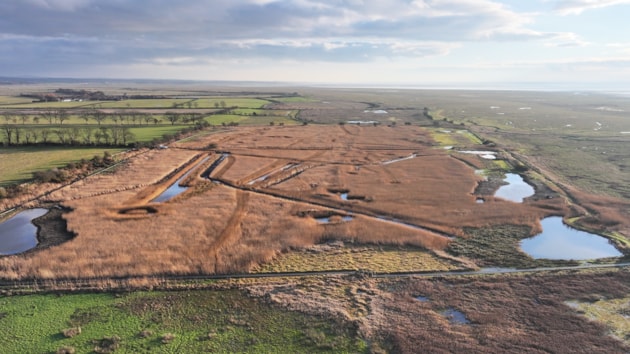
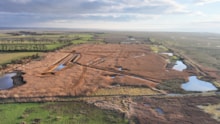
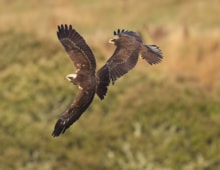
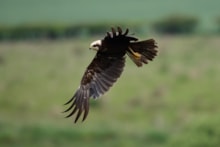
A four-year project to restore the special reedbed habitat at NatureScot’s Caerlaverock National Nature Reserve (NNR) has been hailed a success with the return of marsh harriers to the site.
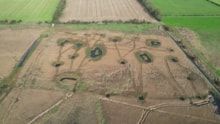
Reserve staff have been working to improve and expand seven hectares of reedbed in the hope of encouraging the birds to breed.
Marsh harriers, once very rare, are now recovering across the UK but remain a scarce breeding bird in Scotland, with reedbeds their favoured habitat.
In the summer of 2019, a pair of birds attempted to breed at Caerlaverock NNR but their nest failed. Staff set out to understand how the site could be improved to help the birds to return and breed successfully.
Visits to other breeding sites as well as vegetation and hydrology surveys suggested that the key to success would be to raise the water table, cut the old reeds to allow room for fresh reeds to grow, create open areas of water and increase the length of reedbed edge habitat.
Staff have worked on one quarter of the reedbed each year to maintain the habitat for species during the project, checking the impact after each stage. An excavator was used to dig out sections of old reed and create open water areas, while ongoing management of the pools and reed growth is carried out by hand using scythes.
NatureScot’s Caerlaverock NNR manager Suzanne McIntyre said: “It has been wonderful to see the impact on the water table and the increase in biodiversity. Dragonflies have been quick to colonise the new pools and there has also been an increase in snipe using the site. Last summer, the hard work paid off even further as a marsh harrier pair nested in the reedbed.
“With the nest hidden in the reeds it is very difficult to get a good visual, but from closely observing flights in and out of the nest and from the number of birds we identified later in the season, we are confident that we had chicks fledge from the site.
“This is a fantastic result as, to date, marsh harrier breeding has been scarce in Scotland. We hope to see the birds return this summer as the restored reedbed continues to recover.”
Restoration work will continue to build on the progress so far, with the long-term goal being to eventually increase the extent of the reedbed from seven hectares up to 12 hectares.
Marsh harriers are highly protected birds and visitors are asked to look out for and respect any signs or exclusion zones on the reserve to avoid any disturbance during the 2026 breeding season.
Restoring habitats and supporting species recovery is a key part of NatureScot’s ambitious plan for nature recovery in Scotland over the next four years. Habitat restoration work on our NNRs – including coastal and peatland restoration and woodland expansion - is leading the way, making a direct and significant contribution to the Scottish Biodiversity Strategy’s ambitious target to halt biodiversity loss and restore nature by 2045.
NatureScot manages 29 NNRs, covering 41,300 hectares or 0.54% of Scotland’s land. These are special places where everyone can enjoy the very best of Scotland’s nature. They help protect an amazing range of wildlife and landscapes, including many rare species and habitats of international importance.
Find out more about Caerlaverock National Nature Reserve.
ENDS
Contact information
- Name
- NatureScot Media
- Telephone
- 0131 316 2655
- media@nature.scot
NatureScot is Scotland's nature agency. Responding to the twin crises of biodiversity loss and climate change, we work to protect and restore nature by inspiring everyone to value our natural world. Our goal is a nature-rich, net-zero future for Scotland. For more information, visit our website at www.nature.scot
'S e buidheann nàdair na h-Alba a th’ ann an NàdarAlba. Bidh sinn a’ gleidheadh agus a’ slànachadh nàdar le bhith a’ brosnachadh a h-uile duine gu spèis a chur air an t-saoghal nàdarra againn, agus sinn a’ freagairt air an dà chùis-èiginn de chall bith-iomadachd ’s atharrachadh na gnàth-shìde. ’S e ar n-amas nàdar beairteach ’s cothromachadh carboin do dh’Alba. Airson an tuilleadh fiosrachaidh, thoiribh sùil air an làraich-lìn againn aig www.nature.scot