17 August, 2026
New resources to raise awareness of beavers in Scotland
Issued on behalf of the Scottish Beaver Advisory Group
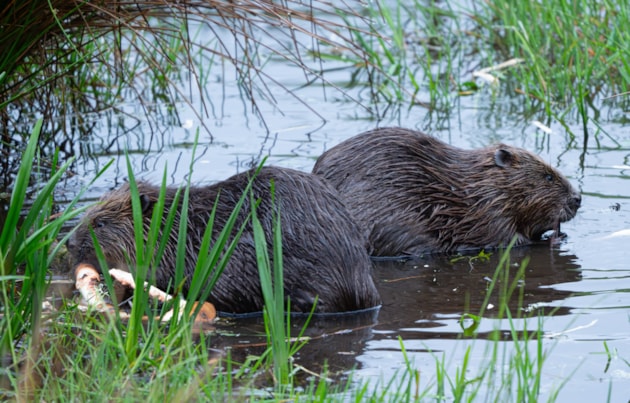
People in Scotland are being encouraged to learn more about beavers as populations continue to expand into new areas.
The Scottish Beaver Advisory Group (SBAG), which brings together a wide range of organisations, has published an information pack to support communities, land managers, businesses and wildlife enthusiasts to learn more about living with beavers.
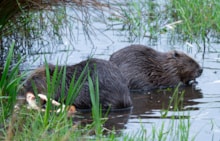
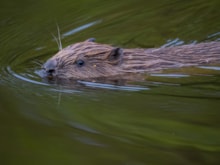
Beavers were common in Scotland for thousands of years until they were hunted to extinction 400 years ago.
Since being reintroduced to Scotland, over the last few years the beaver population is growing and expanding to new areas.
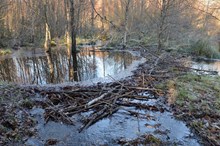
Sarah Robinson, Scottish Wildlife Trust’s Director of Conservation and chair of the SBAG comms sub-group, said: “Beavers have many benefits for climate and nature. They are known as ‘ecosystem engineers’ because their activities shape and create wetland areas that benefit many other animals and plants. They can also reduce flooding, improve water quality, and bring socio-economic benefits such as tourism business opportunities.
“With beavers expanding into new areas, more people may be encountering beavers and their activities for the first time. These resources provide a helpful introduction for individuals, communities and land managers to learn more.”
Nadia Flaherty, Policy Adviser at Scottish Land & Estates, said: “While beaver behaviours can bring many ecological benefits, there are some situations where beavers negatively impact land management, infrastructure or other species of conservation importance. As a result, their impacts need to be managed.
“With beavers back in Scotland and their numbers growing, it is important that we learn about them, how to live alongside them, but also how and when to manage and mitigate any negative impacts. The pack includes information on where to go for advice for anyone experiencing negative impacts associated with beavers for the first time.”
Jenny Bryce, NatureScot beaver team manager, said: “The beaver population is growing and will continue to spread across Scotland. This is partly through planned releases to new suitable areas, as well as through natural expansion as young beavers grow up, leave their family units and start families of their own.
“So, now is a really good time to learn about these native animals and the benefits and impacts they can have. We hope that these resources will help raise awareness and understanding of beavers as we all learn to live alongside them again.”
The information pack can be found at: https://www.nature.scot/scottish-beaver-advisory-group-sbag-resources
ENDS
Contact information
- Name
- NatureScot Media
- Telephone
- 0131 316 2655
- media@nature.scot
Notes to editors
Beaver facts – did you know?
- Beavers can hold their breath under water for up to 15 minutes.
- Beavers are the second largest rodent in the world. An adult beaver is longer than 1m, up to 0.5m in height, and weighs over 20kg.
- Beavers live in freshwater such as rivers, streams and lochs - but they can also travel via saltwater.
- Beavers don’t eat fish. They live on plants found in and around water, bark, and young tree shoots.
- Beavers don’t usually kill trees. Their preferred foods are willow, aspen and poplar, which can re-sprout in response to beavers cutting them down.
- Beavers build ‘lodges’ to live in with underwater entrances and exits, or burrows which may not be visible from above. They also build dams to create deep water ponds to protect themselves. They feel safest in water.
- Beavers use their large tails as a warning system, slapping it off the water’s surface to alert other beavers to danger.
NatureScot is Scotland's nature agency. Responding to the twin crises of biodiversity loss and climate change, we work to protect and restore nature by inspiring everyone to value our natural world. Our goal is a nature-rich, net-zero future for Scotland. For more information, visit our website at www.nature.scot
'S e buidheann nàdair na h-Alba a th’ ann an NàdarAlba. Bidh sinn a’ gleidheadh agus a’ slànachadh nàdar le bhith a’ brosnachadh a h-uile duine gu spèis a chur air an t-saoghal nàdarra againn, agus sinn a’ freagairt air an dà chùis-èiginn de chall bith-iomadachd ’s atharrachadh na gnàth-shìde. ’S e ar n-amas nàdar beairteach ’s cothromachadh carboin do dh’Alba. Airson an tuilleadh fiosrachaidh, thoiribh sùil air an làraich-lìn againn aig www.nature.scot