22 May, 2026
East coast Scots asked to help cover over 700 miles of coastline in search of one of the UK’s rarest insects
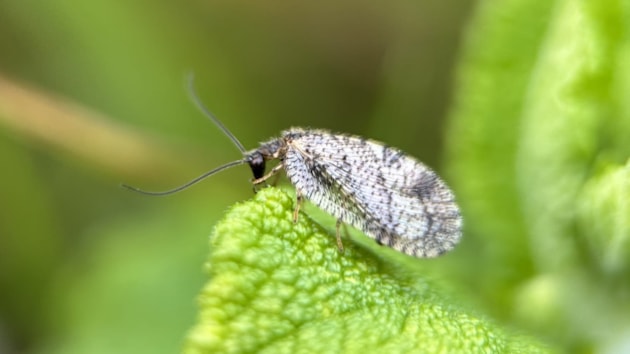
Endangered species conservation programme, Species on the Edge, and invertebrate charity Buglife are asking people living on the east coast of Scotland to help survey over 700 miles of coastline in a search for one of the UK’s rarest invertebrates: the Bordered Brown Lacewing.
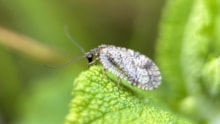
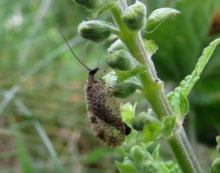
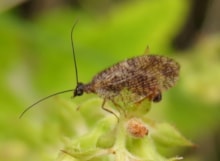
The Bordered Brown Lacewing (Megalomus hirtus) is a small, brown lacewing with finely marked wings, around 1 cm in length. It is known from only a handful of sites in the UK, all of which are along the east coast of Scotland. Evidence suggests that there could be more, yet-to-be-discovered populations of the rare lacewing in the east of Scotland and conservationists are asking the people of Scotland to help them look.
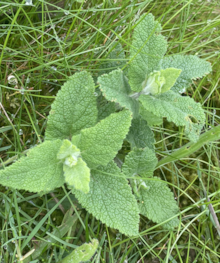
The search area spans from Eyemouth in the south up to John O’Groats in the north. There are various ways people can help. One option is simply looking for and reporting sightings of Wood Sage (Teucrium scorodonia), a plant strongly associated with the Bordered Brown Lacewing. Wood Sage has crinkly, sage-green leaves. In flower – July to September – it has straw-coloured flowers growing on leafless spikes.
Other options for helping are surveying potential Bordered Brown Lacewing habitat – looking for areas similar in appearance and character to where the Bordered Brown Lacewing is currently found and reporting on the area’s features – and looking for the beastie itself.
Fiona Basford, Species on the Edge’s Buglife Conservation Officer on the east coast, said: “There’s still so much we don’t know about the Bordered Brown Lacewing. It’s been found at a handful of locations along the east coast of Scotland, but we’re sure there are more populations out there.
We know it likes exposed, rocky, coastal slopes where Wood Sage grows, so we’re asking people to help us find this type of habitat. We can then send teams to go and check these areas for Bordered Brown Lacewings. Or, you can have a look for the elusive beastie yourself and let us know if you find one!
We know it’s a big task we’ve got ahead of us, which is why we’re asking for help from our fantastic communities across the East Coast.”
Species on the Edge and Buglife are inviting anyone who finds Wood Sage to submit their sighting using the iRecord app or via irecord.org.uk. Those keen to get involved in more advanced surveys, such as habitat surveys or looking for the Bordered Brown Lacewing itself, are invited to get in touch with Fiona: Fiona.Basford@buglife.org.uk. Fiona will provide further information including important health and safety information and survey forms.
Species on the Edge is running a series of events where attendees can learn more about the lacewing, how to identify Wood Sage, and even have a look for it themselves alongside experts:
4 June, 7pm – Bordered Brown Lacewing Talk, Montrose Basin Visitor Centre
10 June, 12:30pm – 3:30pm – Bordered Brown Lacewing ID and Survey Session, St Cyrus NNR
20 June, 12:30pm – 3:30pm – Bordered Brown Lacewing ID and Survey Session, St Cyrus NNR
23 June, 2pm – Bordered Brown Lacewing ID and Survey Session, Cove Bay harbour
To find out more, visit: www.speciesontheedge.co.uk/events
Contact information
- Name
- Eilidh Ross
- eilidh.ross@nature.scot
Notes to editors
About Species on the Edge
Species on the Edge is a multi-partner species conservation programme dedicated to working with communities across Scotland’s coasts and islands to help them secure a future for their local nationally and internationally vulnerable species. Funded by The National Lottery Heritage Fund, the partnership consists of Amphibian and Reptile Conservation, Bat Conservation Trust, Buglife, Bumblebee Conservation Trust, Butterfly Conservation, NatureScot, Plantlife, and RSPB Scotland. The programme is active across seven landscape-scale areas in Scotland: Argyll and the Inner Hebrides; Outer Hebrides; North Coast; Orkney; Shetland; East Coast; Solway Coast. www.speciesontheedge.co.uk
NatureScot is Scotland's nature agency. Responding to the twin crises of biodiversity loss and climate change, we work to protect and restore nature by inspiring everyone to value our natural world. Our goal is a nature-rich, net-zero future for Scotland. For more information, visit our website at www.nature.scot
'S e buidheann nàdair na h-Alba a th’ ann an NàdarAlba. Bidh sinn a’ gleidheadh agus a’ slànachadh nàdar le bhith a’ brosnachadh a h-uile duine gu spèis a chur air an t-saoghal nàdarra againn, agus sinn a’ freagairt air an dà chùis-èiginn de chall bith-iomadachd ’s atharrachadh na gnàth-shìde. ’S e ar n-amas nàdar beairteach ’s cothromachadh carboin do dh’Alba. Airson an tuilleadh fiosrachaidh, thoiribh sùil air an làraich-lìn againn aig www.nature.scot