11 December, 2025
Concerns for decrease in Scotland’s farmland birds

A new report looking at Scottish terrestrial breeding birds shows that all farmland species have decreased in the past decade, but there is also good news for many of our other much-loved bird species.
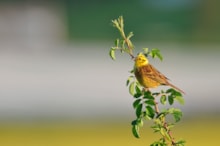
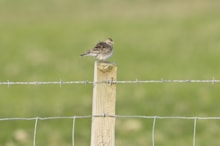
A concerning trend from this year’s NatureScot-BTO report shows that, although pastoral and woodland bird numbers are higher than 1994 levels, all farmland bird levels have decreased over the past 10 years, with arable and wet farmland bird numbers now lower than a decade ago. Farmland birds need diversity, nesting sites and food sources to sustain them, and these long-term changes in their numbers are caused by intensified agriculture, climate change, reduced diversity of crop types and spring-sown crops.
As Scotland works towards halting biodiversity loss by 2030 and restoring nature by 2045, a collaborative project that is making a difference to farmland species in its local area is Clyde Valley Waders. Consisting of 20 farmers focused on the lapwing (also known as peewit), the project’s field trials have seen 80 percent nesting success compared to the typical 20 percent. The Corn Bunting Recovery Project run by RSPB in partnerships with farmers, land managers and the East Neuk Estates Group has also seen improvements in corn bunting populations in North East Scotland. Agri-environment climate schemes such as these have been in place in Scotland for more than 20 years and were introduced to tackle the negative environmental impacts of industrialised farming by financially supporting management options that provide food for farmland birds. While these projects are clearly benefitting local populations, the recovery is not yet showing signs of happening at scale. This is due to other factors such as our changing climate.
Despite the results for farmland birds, over the past decade, 39 of the 66 terrestrial breeding birds included in the annual report have increased in abundance and 27 have decreased. Overall, most of the 66 bird species saw a major increase from 1994 to the mid-2000s before stabilising or decreasing over the past 15-20 years.
Other habitats are doing better than farmland; both woodland birds and urban birds are doing well. Woodland birds had major increases in abundance from 1994 to 2015 before stabilising, likely due to the rapid expansion of Scotland’s woodlands.
Urban birds have a more complicated history, dramatically increasing from 1994 by 42 percent only to decrease from 2005 to 2016. These birds have stabilised, but they are still at risk from loss of green space, disease and impacts from climate change. Some birds are doing better in urban areas than in other habitats - for example, robins, wood pigeons, jackdaws and great tits. However, this success may be at a detriment to other bird species, by increasing the risk of disease and competition to other birds.
Upland birds have been declining steadily and are now 19 percent lower than 1994 levels. Curlew, lapwing, oystercatcher along with upland riverine birds such as dipper, grey wagtail and common sandpiper are all decreasing in population size. They are impacted by land-use change, stream management, forest expansion, climate change and increased nest predation. Decreases in waders has sparked research and conservation efforts, many of which can be explored through the Working for Waders website.
NatureScot’s Director of Nature and Climate Change, Stuart MacQuarrie said: “While Scotland’s terrestrial birds on the surface appear to be in a steady state, with urban birds starting to show improvements, we are right to be concerned for the country’s farmland and upland birds. This evidence of a decline in those species makes us all-the-more determined in our efforts to stop biodiversity loss and restore nature and to champion the fantastic collaborative work projects are achieving. Securing a resilient future for these birds is only going to be possible by working together.
“With up to 20 percent of agricultural land under Agri-Environment Climate Scheme support to manage it in a way that benefits nature and climate, farmers have the frontline knowledge necessary to create better prospects for farmland birds and their livelihoods as a result.”
Contact information
- Name
- NatureScot Media
- Telephone
- 0131 316 2655
- media@nature.scot
Notes to editors
The full statistical publication can be accessed at: Official Statistics - Scottish Terrestrial Breeding Birds 1994 – 2024
NatureScot is Scotland's nature agency. Responding to the twin crises of biodiversity loss and climate change, we work to protect and restore nature by inspiring everyone to value our natural world. Our goal is a nature-rich, net-zero future for Scotland. For more information, visit our website at www.nature.scot
'S e buidheann nàdair na h-Alba a th’ ann an NàdarAlba. Bidh sinn a’ gleidheadh agus a’ slànachadh nàdar le bhith a’ brosnachadh a h-uile duine gu spèis a chur air an t-saoghal nàdarra againn, agus sinn a’ freagairt air an dà chùis-èiginn de chall bith-iomadachd ’s atharrachadh na gnàth-shìde. ’S e ar n-amas nàdar beairteach ’s cothromachadh carboin do dh’Alba. Airson an tuilleadh fiosrachaidh, thoiribh sùil air an làraich-lìn againn aig www.nature.scot