15 September, 2026
Another 35 beavers moved to new Highland homes
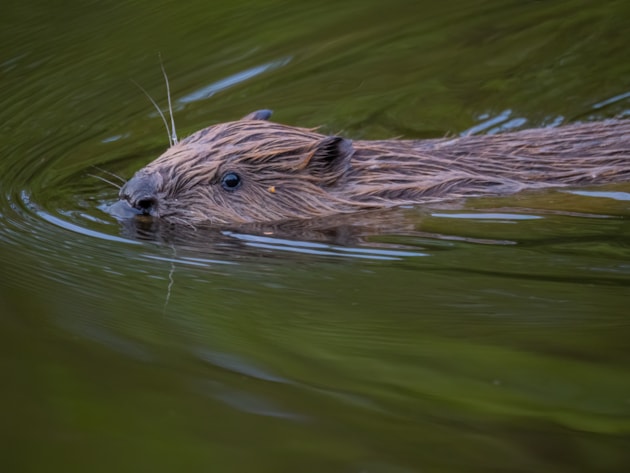
A new report shows that another 35 beavers were moved to new homes in the Highlands in 2025/26 as the population continues to expand.
NatureScot has today published its annual Beaver Management Report covering April 2025 to March 2026.
Over the period, 84 beavers were removed under licence at 22 sites where their activities had the potential to cause serious impacts, with the majority (62 or 74%) being trapped and removed largely from prime agricultural land.
Of these, 35 beavers were released in Scotland with families moved to the Cairngorms National Park, to Forestry and Land Scotland land in Glen Affric and Tay Forest Park and to Abriachan Forest in the Beauly catchment. A further 24 beavers were moved to licenced projects in England and Wales.
Over the period, 22 beavers were killed under licence. This compares to 23 last year and is significantly reduced from previous levels of lethal control.
This reflects the significant and ongoing trapping and translocation effort by the Beaver Trust and Five Sisters Zoo with funding from NatureScot. This approach relies on the willingness of land managers to use non-lethal approaches and for others to be interested in hosting beavers on their land.
As in previous years, NatureScot provided a Beaver Mitigation Scheme for land managers with support and advice given in 107 cases, for example installing flow devices to regulate water levels behind beaver dams or offering advice on tree or culvert protection.
Later this year, a new survey of beaver populations in the Tay and surrounding catchments will be published. It is expected to show a trend of continuing range expansion.
Dr Jenny Bryce, NatureScot’s beaver team manager, said: “Beavers create habitats such as ponds and wetlands where other species thrive, as well as moderating water flows in times of flood and water scarcity. Beaver wetlands can also act as natural fire breaks and refuges for wildlife, as well as improving water quality. In doing so, they play an important role in helping to restore biodiversity and respond to the climate emergency in Scotland.
“We’re pleased to see more of these ecosystem engineers moved to suitable areas this year. We expect the survey of beaver populations in the Tay and surrounding catchments will confirm there continues to be a healthy and expanding beaver population across Scotland.
“We know that beavers can occasionally cause issues, and as the population continues to spread, our Beaver Mitigation Scheme will continue to be available to help land managers as we learn to live with beavers in our rivers, lochs and wetlands.
“Members of the Scottish Beaver Advisory Group have also recently launched a new information pack to help everyone in Scotland learn more about living with beavers.”
The Scottish Beaver Advisory Group information pack is available here: https://www.nature.scot/scottish-beaver-advisory-group-sbag-resources
ENDS
Contact information
- Name
- NatureScot Media
- Telephone
- 0131 316 2655
- media@nature.scot
Notes to editors
In relation to the 84 beavers removed, one beaver died while being held in captive care, while two young beavers, known as kits, are being looked after in captive care until they are old enough for release.
NatureScot is Scotland's nature agency. Responding to the twin crises of biodiversity loss and climate change, we work to protect and restore nature by inspiring everyone to value our natural world. Our goal is a nature-rich, net-zero future for Scotland. For more information, visit our website at www.nature.scot
'S e buidheann nàdair na h-Alba a th’ ann an NàdarAlba. Bidh sinn a’ gleidheadh agus a’ slànachadh nàdar le bhith a’ brosnachadh a h-uile duine gu spèis a chur air an t-saoghal nàdarra againn, agus sinn a’ freagairt air an dà chùis-èiginn de chall bith-iomadachd ’s atharrachadh na gnàth-shìde. ’S e ar n-amas nàdar beairteach ’s cothromachadh carboin do dh’Alba. Airson an tuilleadh fiosrachaidh, thoiribh sùil air an làraich-lìn againn aig www.nature.scot